Industrial Fire Watch Officers — Warehouse, Plant, and Cold Storage Coverage
High-piled storage and process hazards leave no margin when sprinklers go down. Our Fire Watch Officers cover warehouses, manufacturing plants, and cold storage through every impairment and hot work operation.
Fire Watch for Warehouses, Plants, and Distribution Buildings
Industrial buildings concentrate fuel, ignition sources, and value in one space. A distribution center with racked commodity to 30 feet, a manufacturing plant with dust collection and hydraulic equipment, a cold storage facility with insulated panel construction and ammonia refrigeration, or a recycling and transfer operation with mixed loose commodity each depend heavily on sprinkler design that assumes the system is in service. When it is not, IFC 901.7 requires notification and a documented fire watch for the duration of the impairment.
Seattle Emergency Firewatch staffs certified Fire Watch Officers for industrial properties across the Kent Valley, Frederickson, Sumner, Lacey's Hawks Prairie, Everett and Marysville industrial areas, and the Yakima Valley processing corridor. Coverage runs through production shifts and overnight, because industrial impairments frequently outlast a single business day while parts are fabricated or sourced.
High-Piled Storage, Process Hazards, and Patrol Routes
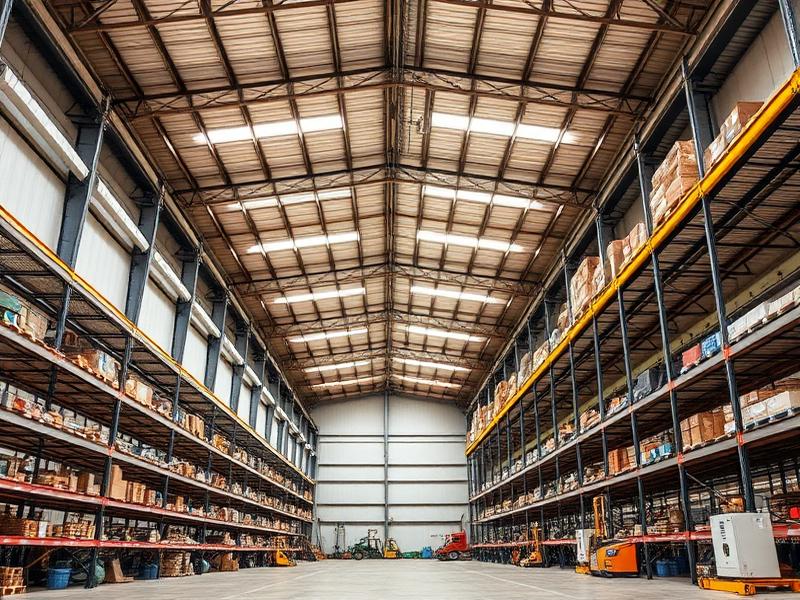
Patrol routes in industrial buildings are built around the hazard classification, not the floor plan. High-piled and rack storage areas need aisle-by-aisle rounds because a fire in a rack flue is hidden from the dock. Officers check that aisles and flue spaces are not blocked, that storage has not crept above permitted heights, that idle pallets and combustible packaging are staged away from ignition sources, and that battery charging areas, compressors, dust collectors, and electrical rooms show no signs of heat or arcing.
In process environments Officers also monitor flammable and combustible liquid storage and dispensing areas, spray operations, ovens and dryers, conveyor drives, and refrigeration machinery rooms. Cold storage adds its own problem: patrols in freezer spaces require rotation and cannot rely on smell or normal visibility cues, so intervals and route order are planned deliberately with the plant's safety lead.
Hot Work, Shutdowns, and Production Coordination
A large share of industrial fire watch is hot work rather than system impairment. Welding, cutting, grinding, brazing, and torch-applied roofing under IFC Chapter 35 require a dedicated fire watch during the operation and for at least 30 minutes after it stops, with a longer monitoring period where the fire marshal or the plant's permit requires it. Our Officers staff the permit watch, keep an extinguisher and charged hose staged, protect openings and floor penetrations, and confirm the area is cold before releasing it.
For planned shutdowns — annual sprinkler testing, main replacement, dry system conversion, or fire pump work — we schedule coverage around production so the watch is in place before the contractor closes a valve and continues until the system is restored and tested. Logs record patrol intervals, areas and racks covered, hazards found and corrected, and notifications made, in a format plant management, the fire marshal, and property carriers all accept.
Compliance and Operational Details
- High-piled and rack storage areas require aisle-by-aisle patrol rounds during impairments
- Blocked flue spaces, over-height storage, and idle pallet accumulation are corrected on every round
- Battery charging, dust collection, compressors, and electrical rooms are checked for heat and arcing
- Cold storage patrols are planned with rotation because normal visibility and smell cues are limited
- IFC Chapter 35 hot work watches continue at least 30 minutes past the end of the operation
- Planned shutdown coverage is scheduled around production and contractor restoration testing
Fire Risks
- Flammable materials and chemical storage
- Heavy machinery, conveyors, and high electrical loads
- Large open floor plans with high stored fire loads
- Battery charging areas for lift equipment
- Limited access points for fire department response
Compliance Requirements
- Industrial occupancies have specific fire watch requirements during impairments
- Hazardous material areas may require enhanced patrol protocols
- Fire watch must cover all areas affected by the system impairment
- WISHA and OSHA workplace fire prevention requirements apply
Benefits of Professional Fire Watch
- Protect valuable inventory and production equipment
- Keep operations running during fire system maintenance
- Meet fire code and workplace safety requirements
- Officers trained in industrial fire hazard recognition
Related Services
Emergency Fire Watch
Immediate deployment of certified Fire Watch Officers when fire protection systems fail unexpectedly.
Fire Alarm System Failure
Continuous patrol coverage when fire alarm systems are offline for repair or replacement.
Sprinkler System Impairment
Fire watch patrols when automatic sprinkler systems are impaired or taken out of service.
Standpipe & Fire Pump Impairment
Coverage for high-rise standpipe outages, fire pump repairs, and water supply interruptions.
Planned System Maintenance
Scheduled fire watch coverage during planned fire protection system shutdowns and testing.
Fire Marshal Ordered Fire Watch
Same-day compliance when an inspector or fire marshal orders fire watch as a condition of occupancy.
Industrial & Warehouse Fire Watch Questions
Do you provide hot work fire watch for welding and cutting?
Yes. We staff IFC Chapter 35 hot work watches with an extinguisher staged at the work area, protection of openings, and monitoring for at least 30 minutes after the operation stops.
Can you cover a plant impairment across multiple shifts?
Yes. Industrial impairments routinely run several days. We staff continuous coverage across production and overnight shifts with no gap at shift change.
Do your Officers understand high-piled storage risks?
Yes. Officers assigned to warehouse and distribution sites patrol rack aisles, watch flue spaces and storage heights, and monitor charging, dust collection, and electrical equipment.
Need Fire Watch?
24/7 dispatch for immediate fire watch deployment.
(206) 657-6227Request ServiceAll Industries
Need Fire Watch Coverage Right Now?
Our dispatch center is staffed 24/7. Certified fire watch guards can be on-site within hours of your call.
Page last revised