
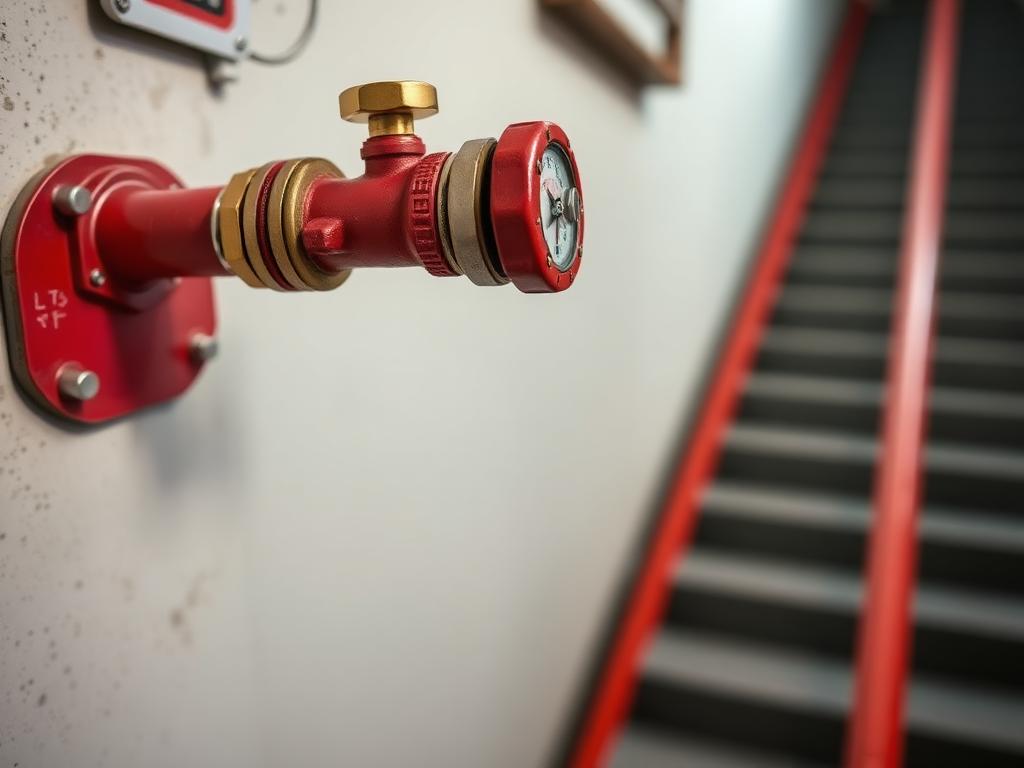
Standpipe & Fire Pump Impairment Fire Watch in Seattle
Coverage for high-rise standpipe outages, fire pump repairs, and water supply interruptions.
Overview
Standpipe systems and fire pumps are the fire department's primary means of fighting a fire in a mid-rise or high-rise building. When either is out of service, the building loses its firefighting water supply and the authority having jurisdiction will require a dedicated fire watch. Our officers patrol every affected floor, confirm stairwells and standpipe outlets remain accessible, and document the impairment from start to restoration.
When Is Fire Watch Required?
- Standpipe riser taken out of service for repair or testing
- Fire pump failure, repair, or annual testing
- Water supply or municipal main interruption to the building
- Pressure-reducing valve or hose valve replacement
- Damaged riser following seismic, freeze, or impact events
Code Compliance
The International Fire Code treats standpipe and fire pump outages as impairments to a required system, which triggers fire watch obligations and notification to the fire department. Every patrol is recorded in a timestamped fire watch log available for inspection.
Industries Served
What a Standpipe Impairment Means
A standpipe impairment takes out the vertical water supply firefighters rely on to fight a fire above or below grade without dragging hose up stairwells — a class I, II, or III system taken out of service for repair, a riser isolated during renovation, or pressure loss discovered during required annual flow testing. Because standpipes exist specifically to support fire department operations rather than automatic suppression, the fire watch requirement under IFC 901.7 is paired with an operational concern that goes beyond the building's own occupants: if a fire occurs during the impairment, responding crews will not have the pressurized water source they plan around, and the watch has to be structured with that in mind.
Standpipe impairments are most common in high-rise buildings, parking structures, and covered mall buildings, where the standpipe is the primary firefighting water supply for upper floors or interior areas beyond hose lay distance from an exterior hydrant, which is exactly why AHJs treat these impairments with particular seriousness regardless of building occupant load.
What the AHJ Expects on a Standpipe Outage
Fire marshals want to know which zone of the standpipe is affected — often standpipes are split into low-rise and high-rise zones — and whether the fire department connection and hose valves remain physically accessible even though the system is not charged, since crews may still need to identify those locations quickly if dispatched during the outage. Many jurisdictions require the fire department's operations or pre-fire planning division to be notified separately from the standard impairment notification specifically because standpipe outages change how an incident commander would stage an attack on the building, and that notification is treated as a distinct step from simply logging the impairment with the fire prevention office.
For high-rise buildings, some AHJs will require additional measures beyond a fire watch alone, such as staging supplemental hose packs or requiring the building's own fire brigade or life safety team to have specific knowledge of the outage, and will ask about those measures directly during inspection.
Patrol Interval and Route in High-Rise and Structured Parking
Interval typically runs 15 to 30 minutes and the route has to account for the vertical nature of the risk: Officers patrol stairwells housing the standpipe risers specifically, not just occupied floors, checking that hose valve caps are in place, that the stairwell doors that would be used for firefighting access remain functional, and that nothing has been stored or stacked against the riser or valve cabinets. In parking structures, the route also covers ramps and drive aisles where the standpipe hose connections sit at intervals, verifying they have not been blocked by parked vehicles or construction material.
Because standpipe-served buildings are often tall or deep enough that a full patrol takes real time, route sequencing matters: Officers plan the loop so no zone goes longer than the required interval even in a building where a single elevator trip and stairwell walk can consume several minutes, and log the actual time of arrival at each zone rather than an estimated schedule.
Logging and Restoring Standpipe Service
Standpipe logs record which zone or riser was out, confirmation on each round that hose connections and valve cabinets remained accessible and unobstructed, and any fire department notification specific to the outage beyond the standard impairment call. Where the impairment affects only part of a zoned system, the log should clearly state which floors were covered by the watch and which retained full standpipe protection, since mixing those together in the record makes it impossible for an inspector to verify coverage matched the actual outage.
Restoration is confirmed by a hydrostatic or flow test appropriate to the class of standpipe and the scope of repair, performed by a licensed fire protection contractor, with the fire department's operations division notified that full standpipe service has resumed — closing the loop on the separate notification made at the start of the outage. Ending the watch before that operational notification is made, even after the physical test passes, is the most frequent gap we see on standpipe impairments.
Standpipe & Fire Pump Impairment Questions
Does the fire department need separate notice for a standpipe outage?
In most jurisdictions, yes. Beyond the standard impairment notification to fire prevention, the fire department's operations or pre-fire planning division is typically notified separately because a standpipe outage changes how crews would stage an attack on the building.
What does an Officer check at each standpipe zone?
Hose valve accessibility, that caps and cabinets are in place and unobstructed, that stairwell doors used for firefighting access function normally, and in parking structures, that hose connections along ramps and drive aisles are not blocked.
Is additional coverage required beyond a fire watch for high-rise standpipe outages?
Some AHJs require supplemental measures such as staged hose packs or specific notice to the building's fire brigade or life safety team in addition to the fire watch. We confirm the local requirement before the watch begins.
What confirms a standpipe impairment is over?
A hydrostatic or flow test appropriate to the standpipe class, performed by a licensed contractor, and a notification to the fire department's operations division that full service has resumed — not just the physical repair alone.
Need This Service?
Our dispatch center is available 24/7 for immediate fire watch deployment.
(206) 657-6227Request ServiceOther Services
Need Fire Watch Coverage Right Now?
Our dispatch center is staffed 24/7. Certified fire watch guards can be on-site within hours of your call.
Page last revised